Croatia president requests emergency Parliament session over Gospić hazardous waste site

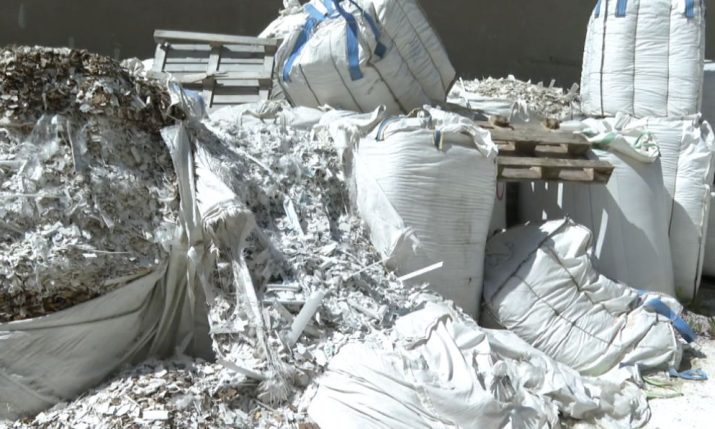
Croatian President Zoran Milanović has formally requested an extraordinary session of the Croatian Parliament to address the illegal dumping of hazardous waste at the Bilajska 50 site in Gospić and what he describes as an urgent threat to groundwater and the environment.
Milanović submitted the request on 18 August under Article 79 of the Croatian Constitution. He has asked Parliament Speaker Gordan Jandroković to convene the session and has proposed four conclusions requiring action by the Government and state authorities, he said in a statement.
The first would require the Government to immediately begin permanent remediation of the hazardous waste site and ensure continuous monitoring of groundwater pollution and other environmental changes. The Government would also be required to report to Parliament within 15 days on measures taken and monitoring results, followed by reports every 30 days.
A second proposed conclusion would require the Government to meet representatives of local residents and civic initiatives within three days, provide them with detailed information about the site and planned measures, and keep the public informed.
Milanović is also calling for the appointment of a new Chief State Inspector within 15 days. The position has been vacant since November 2025, when former Chief State Inspector Andrija Mikulić was dismissed.
The fourth proposal would require the State Inspectorate to inspect all waste sites across Croatia where there are reasonable grounds to suspect that hazardous or illegally dumped waste is present, with a report to Parliament within three months.
Concerns over groundwater contamination
Milanović’s request refers to an expert assessment by environmental experts from the University of Zagreb’s Faculty of Geotechnical Engineering.
According to the assessment cited by the President, investigations and chemical analyses indicate a local impact on groundwater quality at the industrial complex at Bilajska 50. Additional testing for PFAS compounds reportedly found evidence that the site is a very likely
The President said the findings demonstrate that illegal waste disposal at the location has already had a local impact on groundwater.
He called for remediation to begin immediately, independently of ongoing investigations into who was responsible for the illegal disposal.
Milanović criticised the Government, the Ministry of Environmental Protection and Green Transition and the Environmental Protection and Energy Efficiency Fund, arguing that their response has not been sufficiently timely or adequate given the seriousness of the situation.
He also criticised the Government for continuing with its existing Waste Management Plan rather than taking what he considers to be urgent additional action.
The President said the Gospić case should also lead to inspections of other potentially illegal waste sites across Croatia.
He argued that the State Inspectorate should adopt a more proactive approach to prevent similar cases and identify possible irregularities at existing waste disposal sites.
Milanović also referred to the former Chief State Inspector’s arrest in connection with corruption allegations related to illegal waste disposal, stressing the need for a new head of the State Inspectorate.
His request follows a meeting of Parliament’s Committee for Environmental Protection and Nature on 17 August, which was interrupted without, according to Milanović, decisions that would have advanced the urgent remediation of the Gospić site.
How the extraordinary session works
Under the procedure cited in the request, the Speaker of Parliament must convene an extraordinary session within eight days of receiving the President’s formal request.
The President determines the agenda for the requested session, meaning the Speaker cannot alter, reject or add to the subjects included in the request.
For Parliament to debate and make decisions, a quorum of at least 76 MPs is required.
Milanović said Parliament should consider the proposed conclusions as a matter of urgency, citing the protection of public health, the environment and groundwater in Gospić and Lika-Senj County.
Source: www.croatiaweek.com